













End-to-end image, video, and sensor data services for training and evaluating Physical AI and computer vision models.
Modern AI systems do more than process text. They perceive and interact with the physical world. Robotics, autonomous systems, agriculture, and geospatial AI all depend on high-quality image, video, and sensor data delivered quickly.
In practice, teams need large volumes of accurately labeled data they can iterate on as models evolve.
Innodata delivers end-to-end image, video, and sensor data services that support rapid retraining, rigorous evaluation, and reliable deployment at scale.
Innodata helps AI teams turn raw visual data into production-ready training datasets.
Raw imagery from cameras, satellites, microscopes, or devices
Footage from cameras, drones, dashcams, or any feed
(RGB, IR, LiDAR, egocentric, aerial, HSI, etc.)
for custom data collection when off-the-shelf datasets do not exist.
In addition to annotation, we also support custom image, video, and sensor data collection. We work with partners and internal teams to source and capture domain-specific datasets, enabling customers to train models on exactly the scenarios they care about.
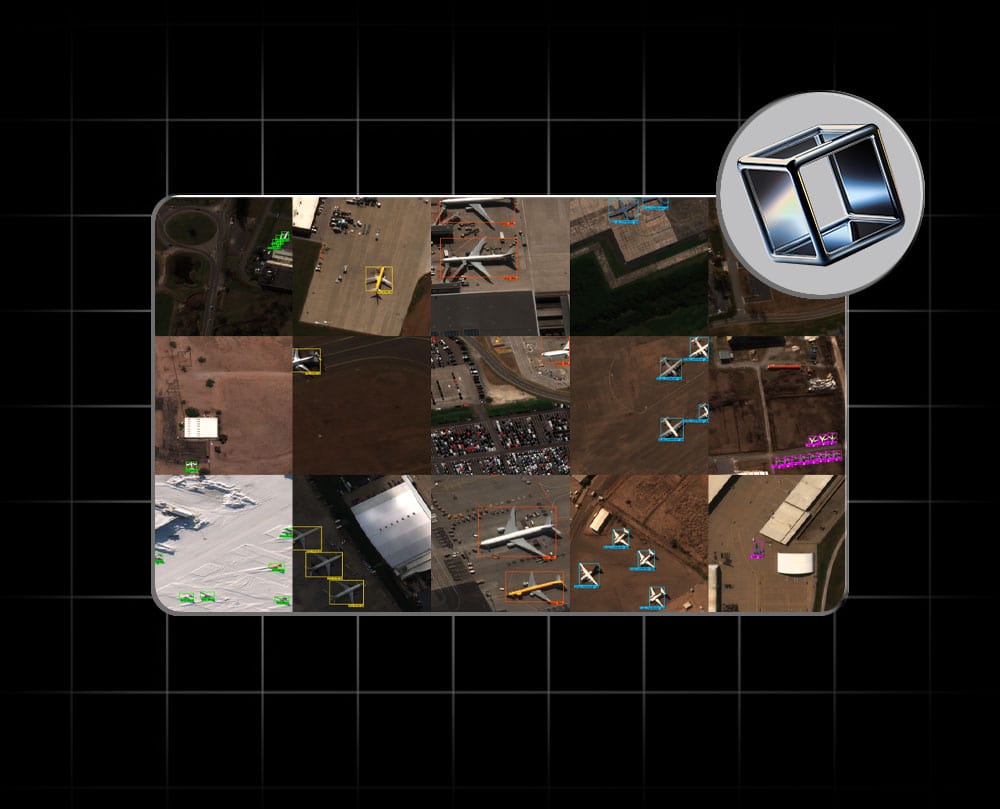
We support complex computer vision tasks across people, animals, objects, and environments:
Our teams routinely process thousands of frames per night, turning around labeled datasets in hours, not weeks.
Tanner, F., “Evaluating prompt design choices for object detection, counting, and classification in overhead imagery,” In Proceedings of SPIE, Pattern Recognition and Prediction XXXVII, Vol 14032. 2026
Motion-aware analytics are a core part of our quality control approach for Physical AI. Beyond basic labeling, we analyze how things move.
Using keypoint motion and kinematic modeling, we:
By detecting issues before training, this approach reduces downstream model failure risk and improves overall model reliability.
Speed doesn’t come at the cost of quality.
We combine:
This hybrid approach dramatically reduces annotation time while maintaining the precision data scientists expect for training and evaluation.
Video source: https://www.youtube.com/watch?v=2ldTdzNi4nk
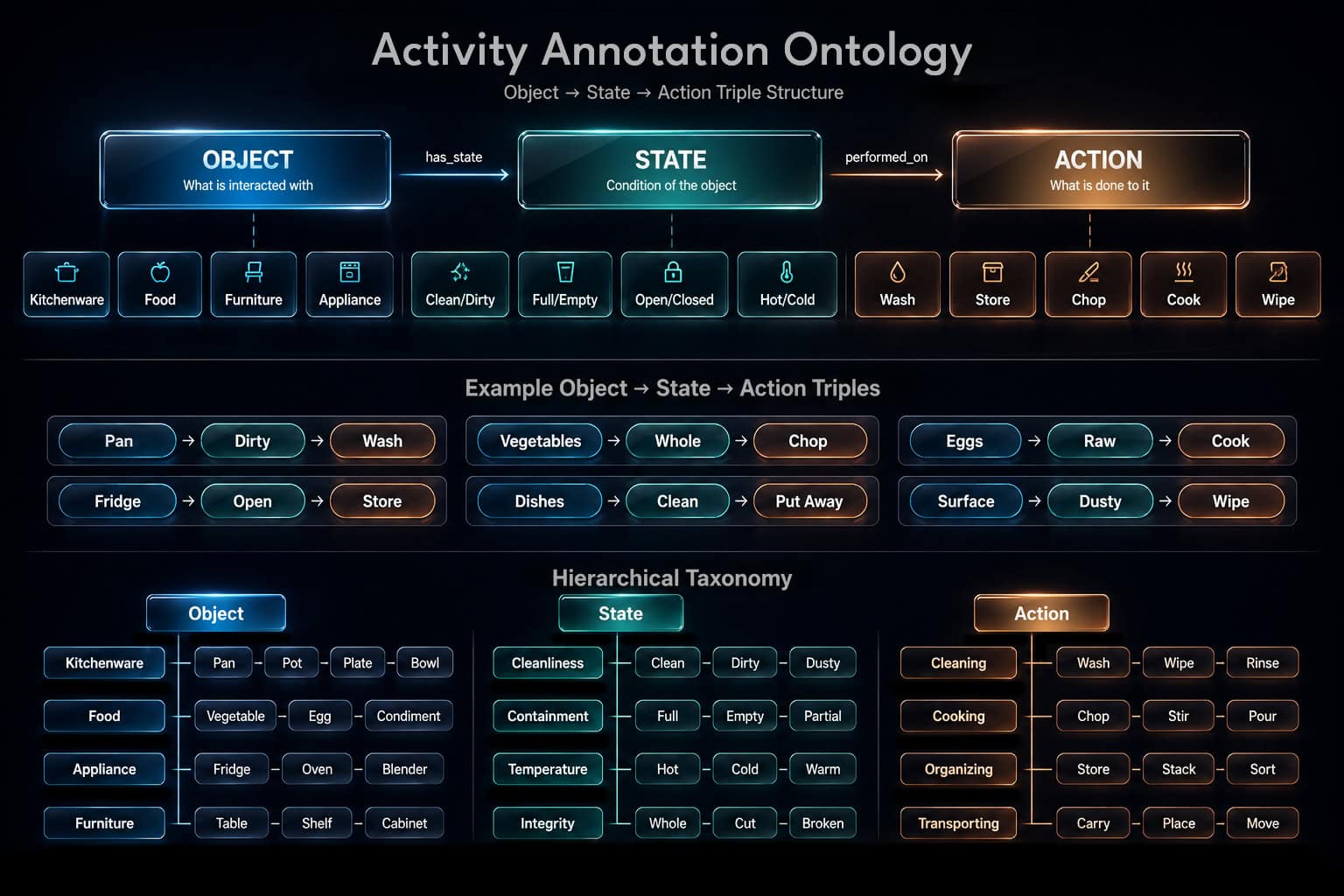
We treat egocentric and robotics-focused data as a core capability, not a niche use case. As robotics and embodied AI adoption accelerates, demand for egocentric (first‑person) video labeling is growing fast.
We support:
These datasets directly support manipulation, navigation, and real-world interaction models.
D. Damen et al., “EPIC-KITCHENS-100: A Large-Scale Dataset for Egocentric Action Recognition,” International Journal of Computer Vision (IJCV), vol. 130, no. 1, pp. 33–55, 2022.
Without automation, a single annotated video can take hours.
Innodata delivers:
This speed enables faster experimentation, faster retraining, and faster deployment.
Whether you’re labeling a pilot dataset or retraining models nightly, we scale with you.
Our quality approach goes beyond spot checks:
The result: datasets that data scientists trust, even for the most complex physical AI use cases.
Innodata supports some of the world’s most advanced AI teams, including leading hyperscalers and frontier AI organizations, across high-volume training data, evaluation, and quality assurance workloads.
Whether you’re training a new vision model or scaling production pipelines, Innodata helps you move faster with data you can trust.
Talk to us about designing and delivering a Physical AI data pipeline tailored to your models and deployment goals.